Artist Audit
Yesterday, I spent an hour on the phone with a very nice lady from the IRS who was sitting in New York with my file in front of her, very perplexed. She had never dealt with a return quite like mine, and did not know where to start.
IRS: So you are a teacher… but do you also work in a museum?
K: yes in 2004, I was teaching, but I was also the BFA director, which means that I made a lot of trips to the museum to help students put up their exhibitions.
IRS: I see here that you have claimed business use of your home?”
K: Yes, the university required that I produce artwork as part of my job, but they did not provide me with a place to do it in, so I used approximately one quarter of my home to produce art exclusively.
IRS: So you spent over ten thousand dollars on business expenses in 2004?
K: That’s correct. It was an unusual year in that I spent a month living and working in NYC, so the number is even higher than usual.
IRS: That’s almost a quarter of your take-home income.
K: That’s correct. I put myself into debt with my business expenses that year.
IRS: …and most of these travel expenses, they are for what?
K: Conferences where I deliver papers, the delivery and pickup of artwork, traveling to see important exhibitions, and I go to NYC several times a year because I am trying to get a gallery there to represent my work.
IRS: And the university sees this as part of your job?
K: yes. It is a research university. Research makes up one third of my job description. While other professors need to publish articles or books, I need to have exhibitions, get reviewed, get catalogs, etc. At the end of the year I was evaluated based on how many exhibitions I had, where they were, how many reviews I received, etc.
IRS: ….and the university reimbursed you for only $300?”
K: That’s correct. $300 per year.
IRS: Why would anyone do what you are doing?
K: Theoretically, for the university, if a professor is very visible, it brings more students to study at the university. For me, I spend the money because I see it as a long-term investment in my career.
IRS: Well, forgive my ignorance about art, but it seems very strange.
K: That I have, effectively, put myself in debt for my career.
IRS: Yes. We don’t see a lot of that.
I have lived in an ivory tower for so long: I exist in a world of art, and I have as far back as I can remember. I don't really care what people think, so I haven't spent any time at all seeing myself through their eyes. Years ago, on my visits home from grad school, my mother would remark, exasperated, "Can't you talk about anything but painting?!" At the time, it was all I thought about. The largest part of my brain is still occupied by aesthetics, ideas, and career. Today, for the very first time, I realized that, to some people, artists must seem like they are from another planet.
P.S. Due to my obsessive receipt and record keeping, I came through the IRS inquiry with flying colors. Word has it that the IRS loves to audit artist/professors.
Labels: artists and taxes, auditing artists

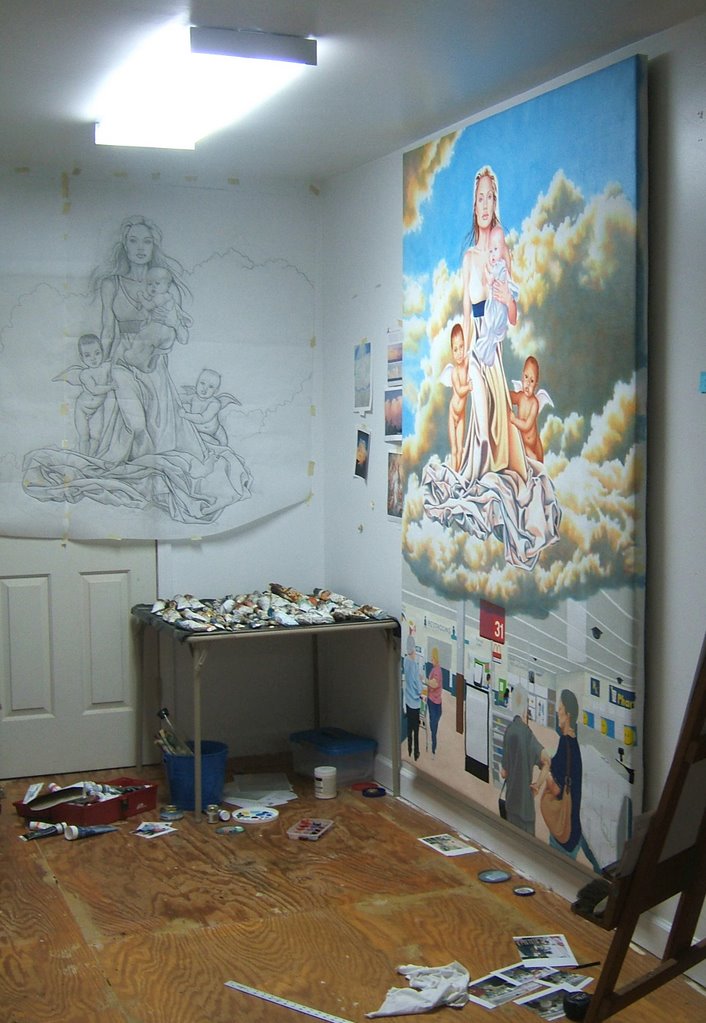
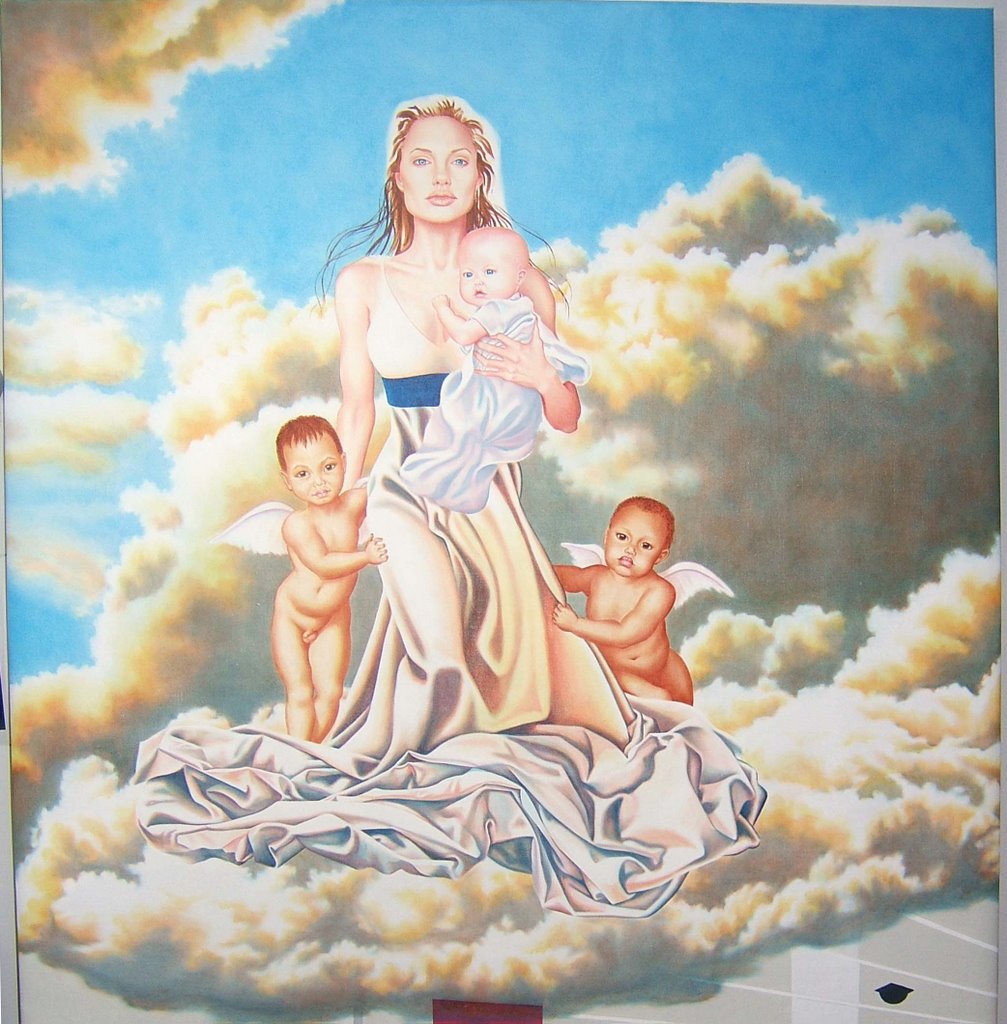
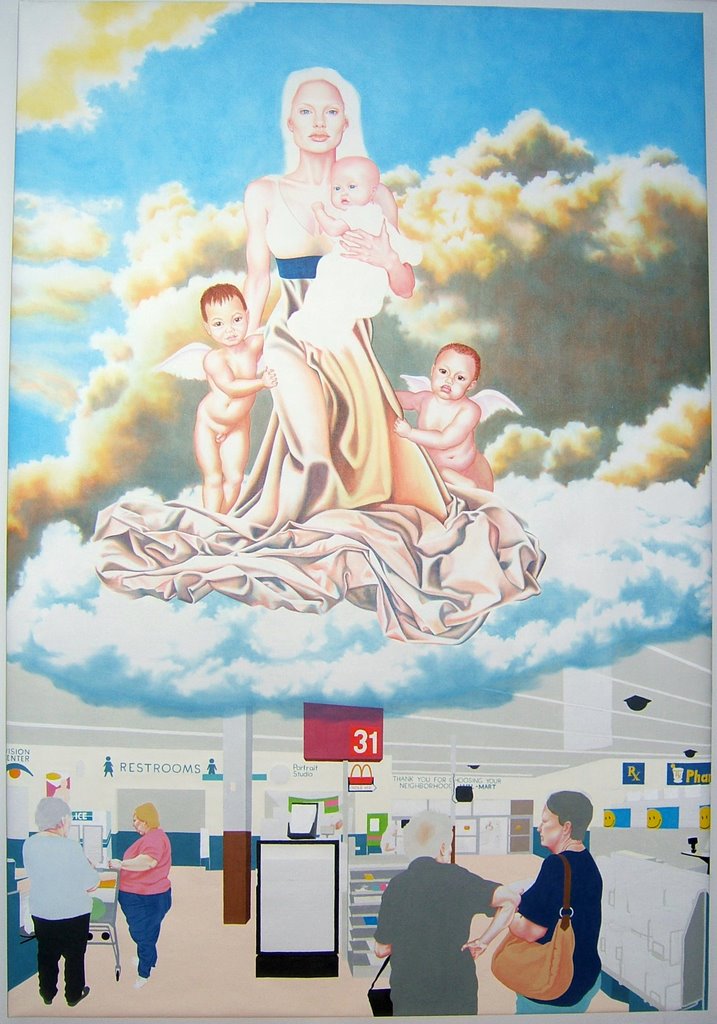
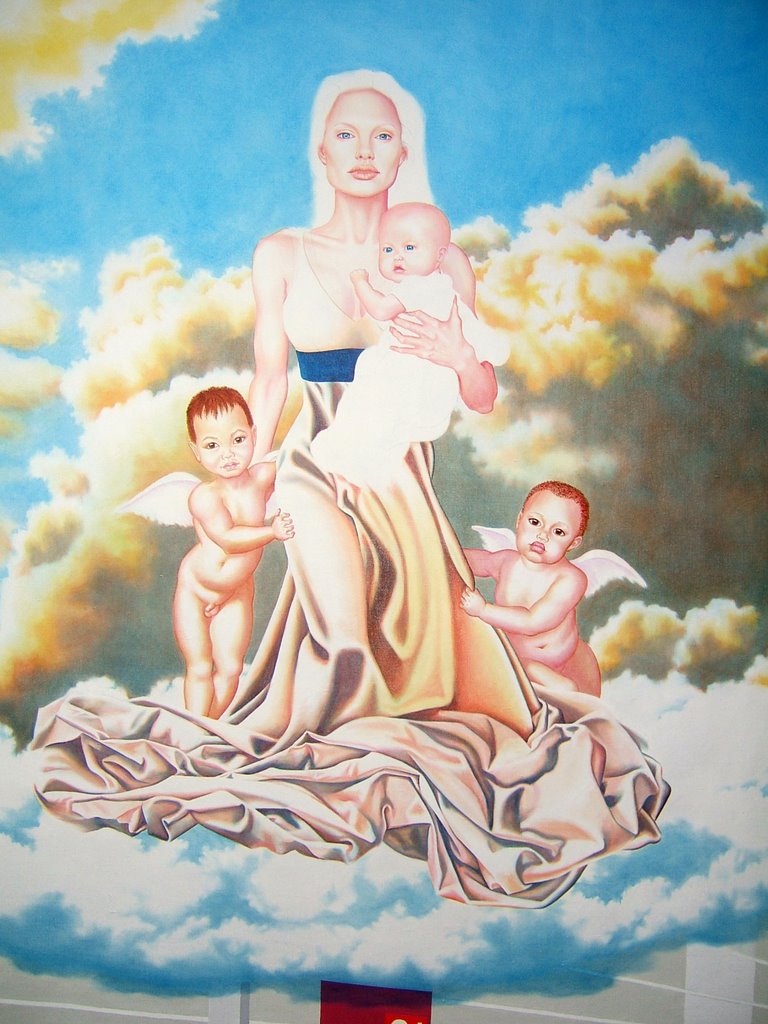
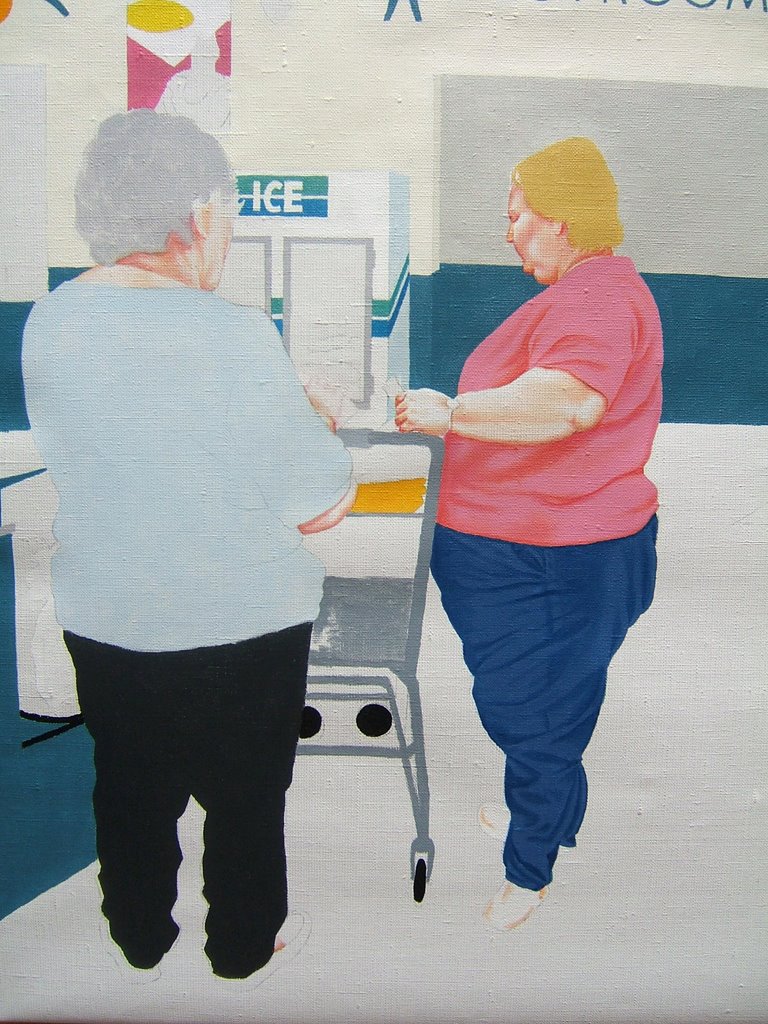
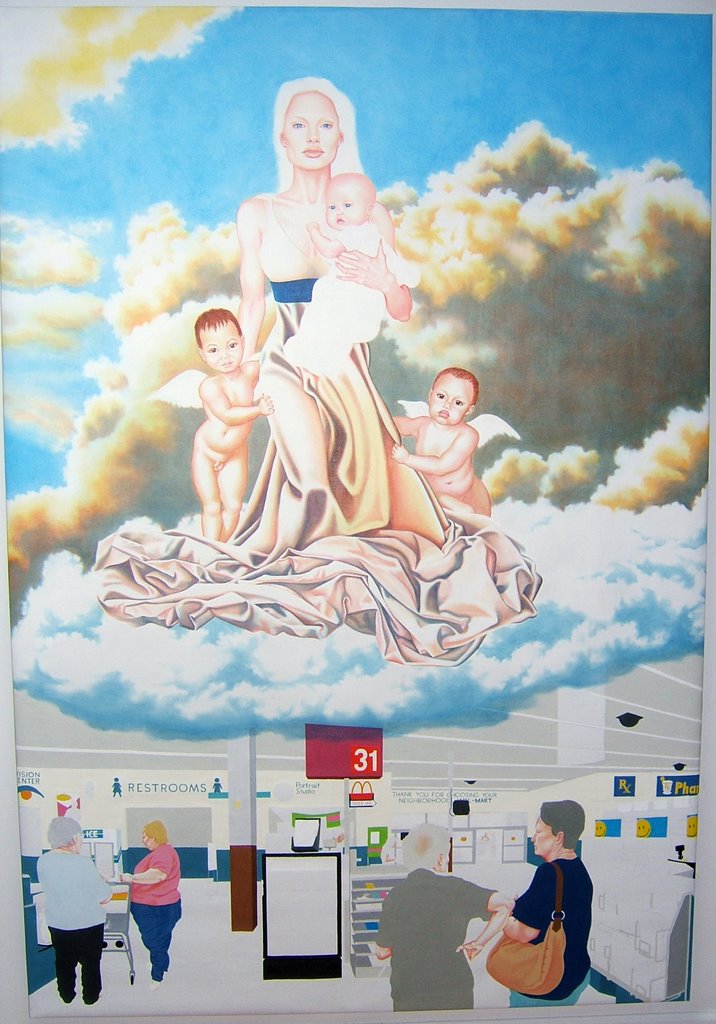
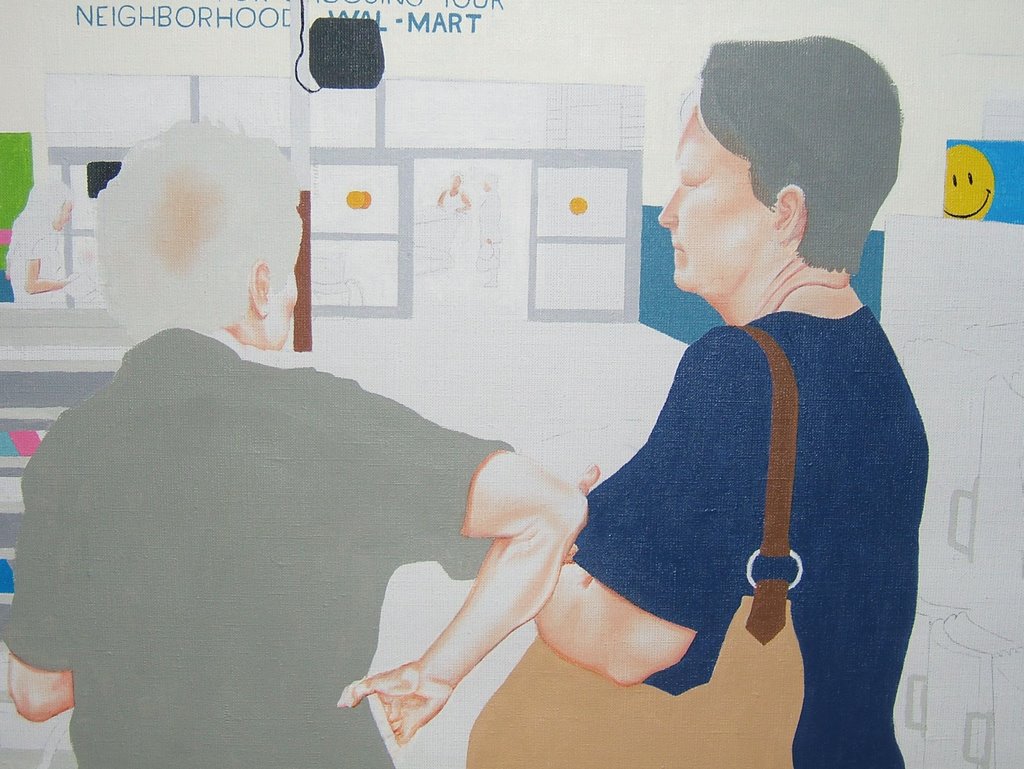
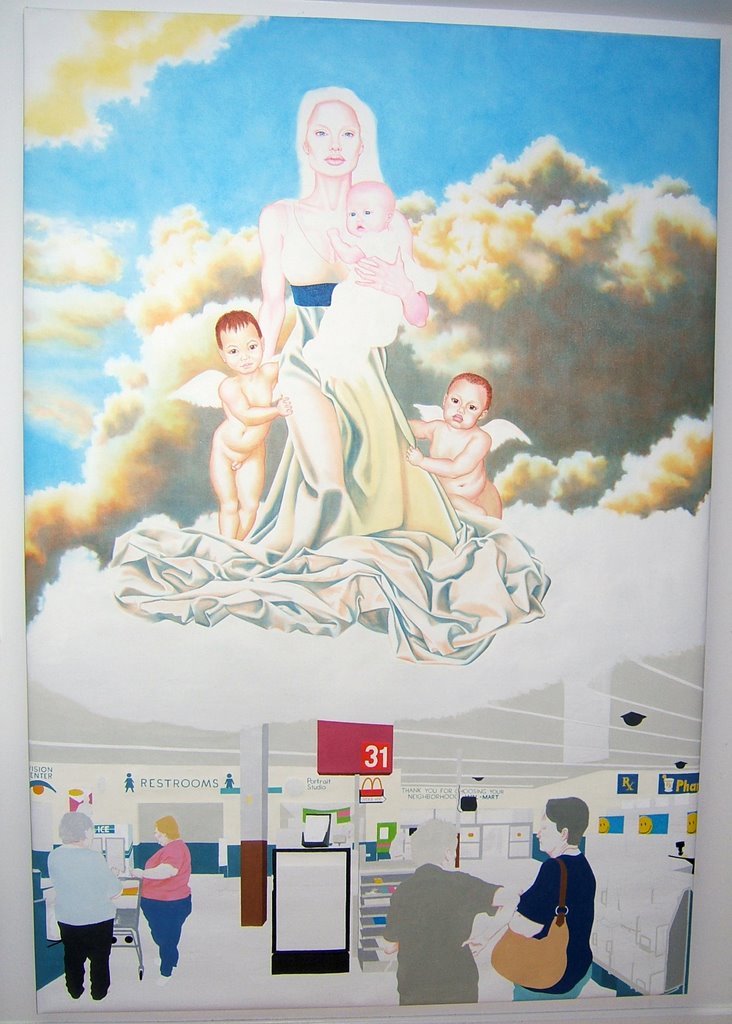
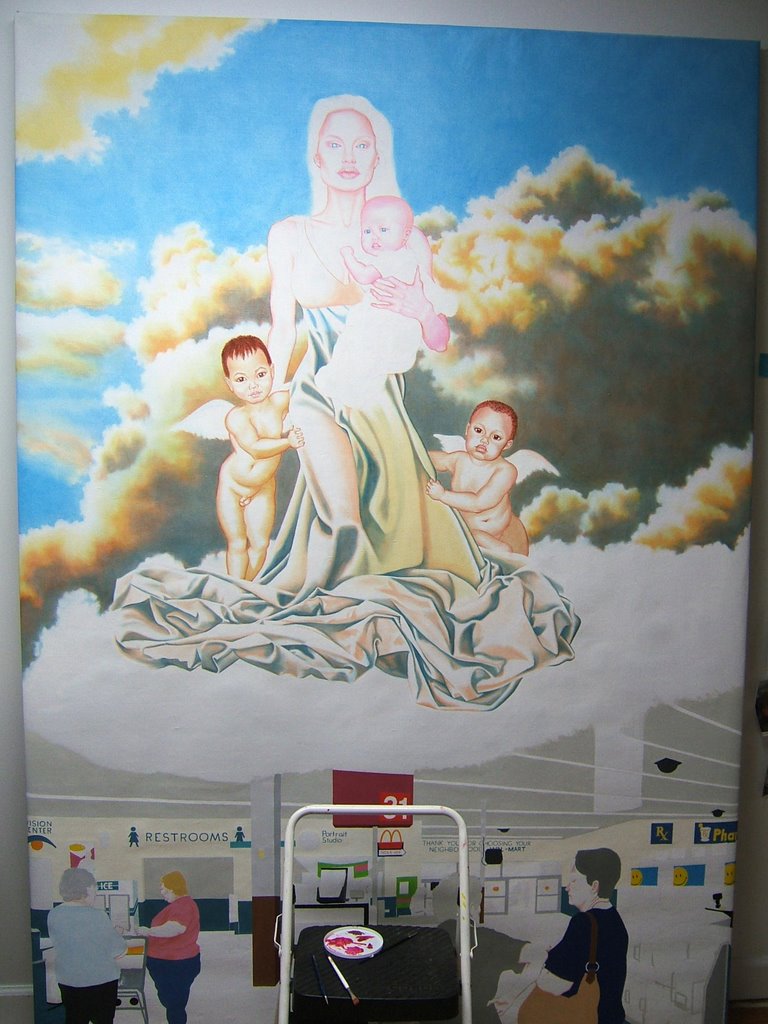
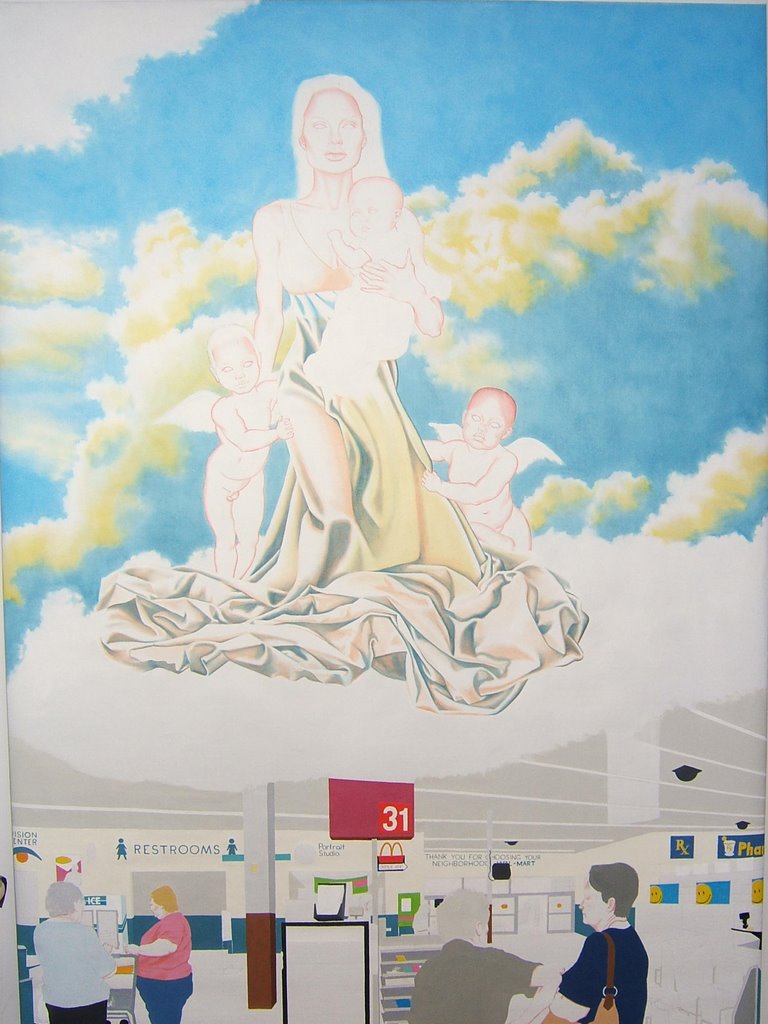
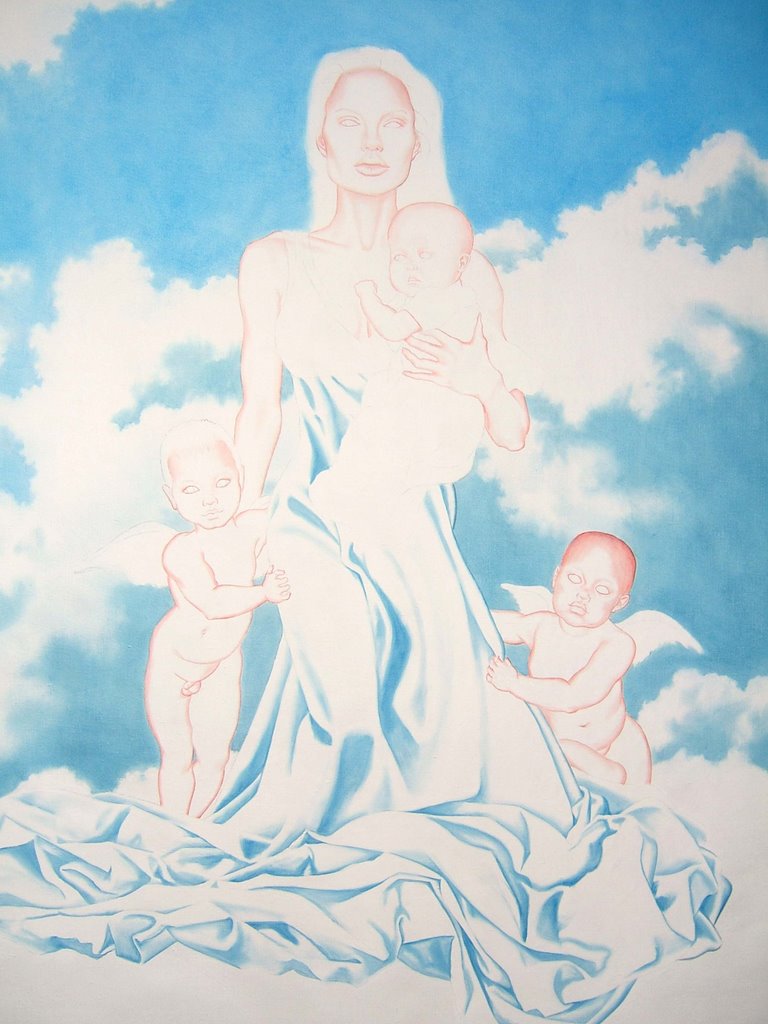
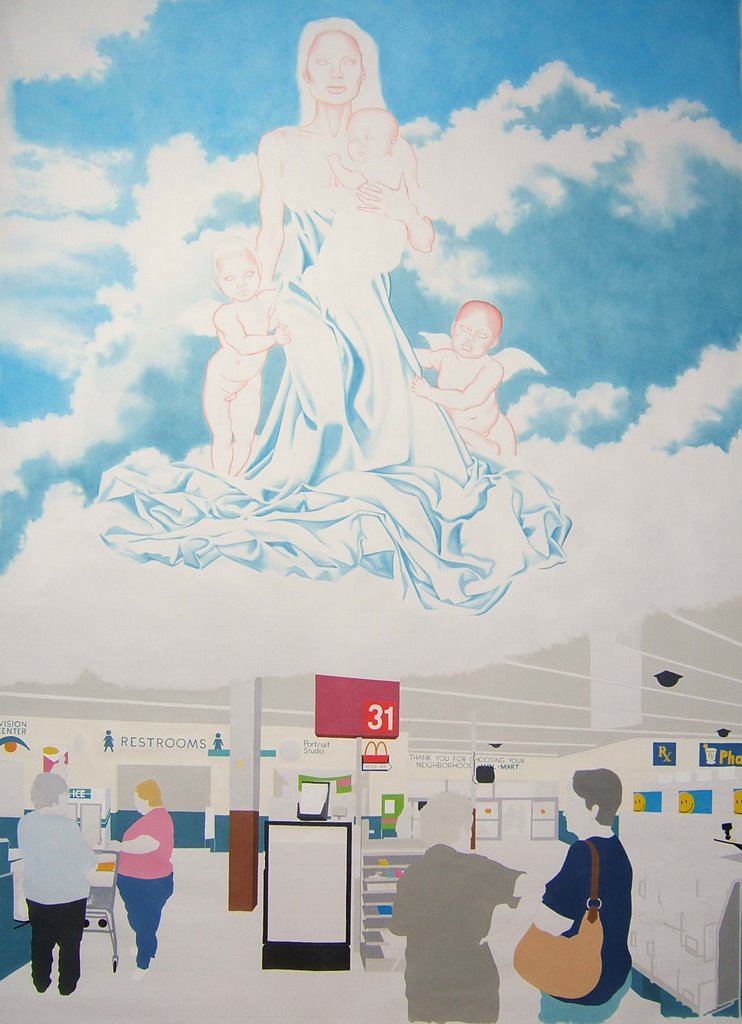
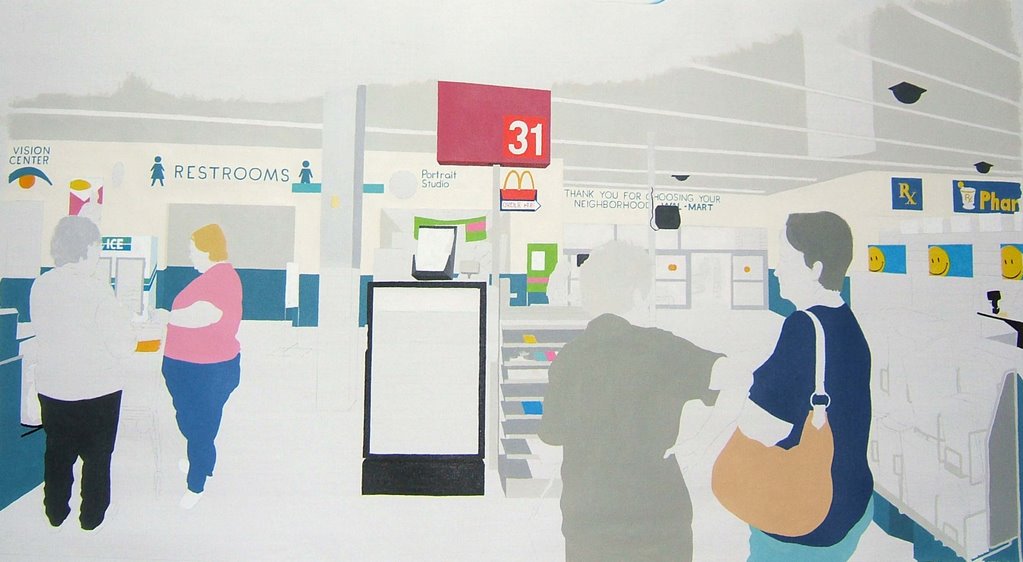
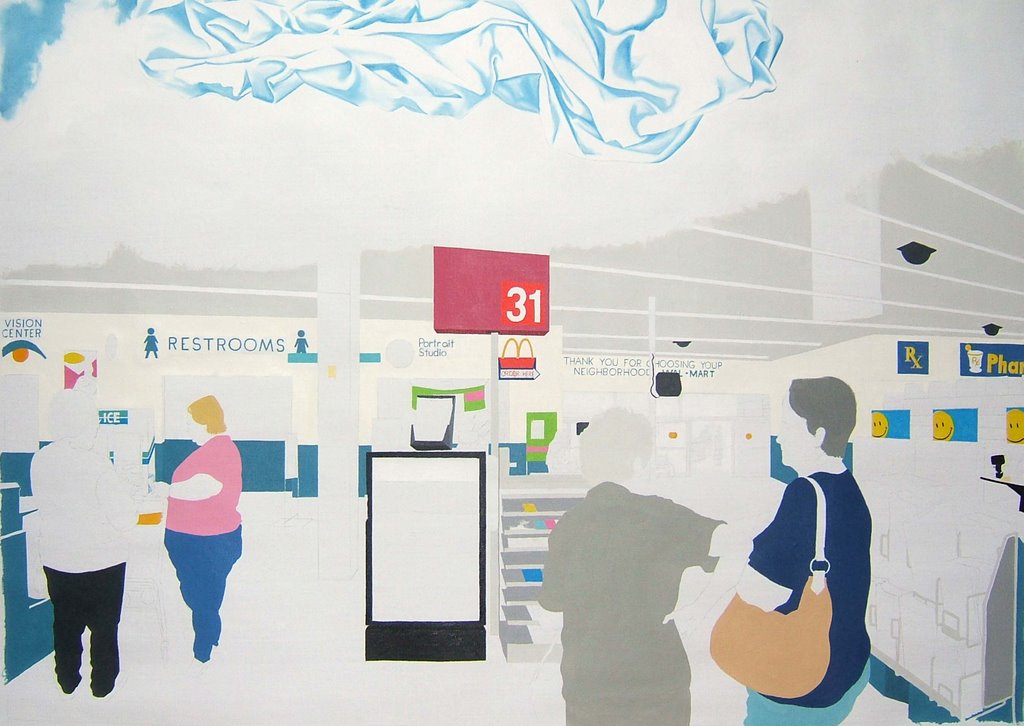
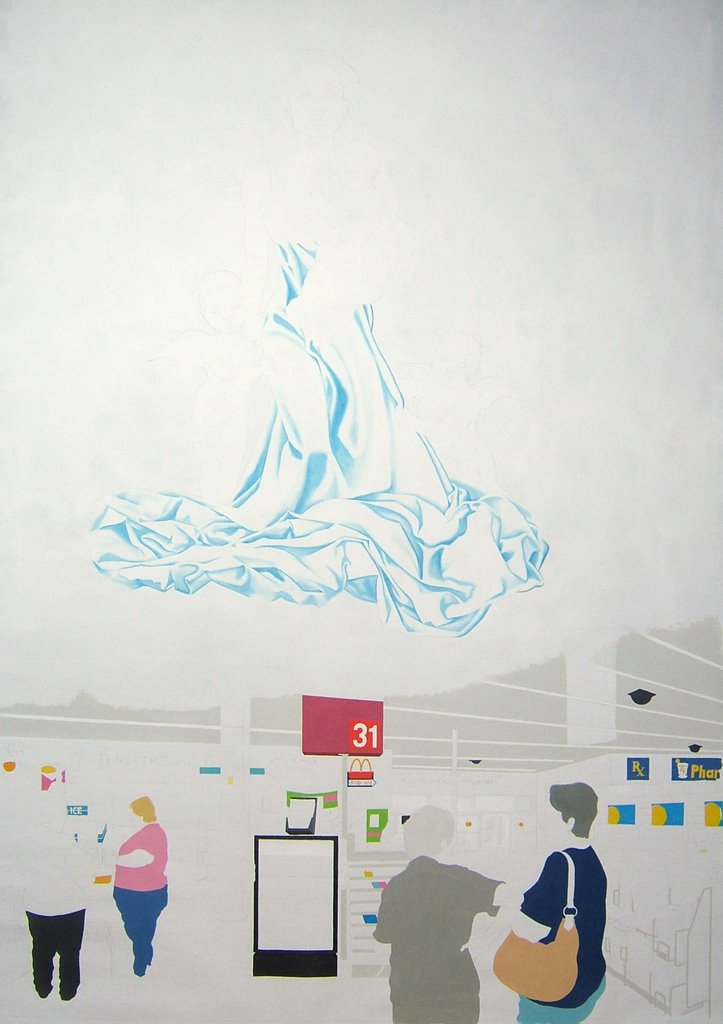
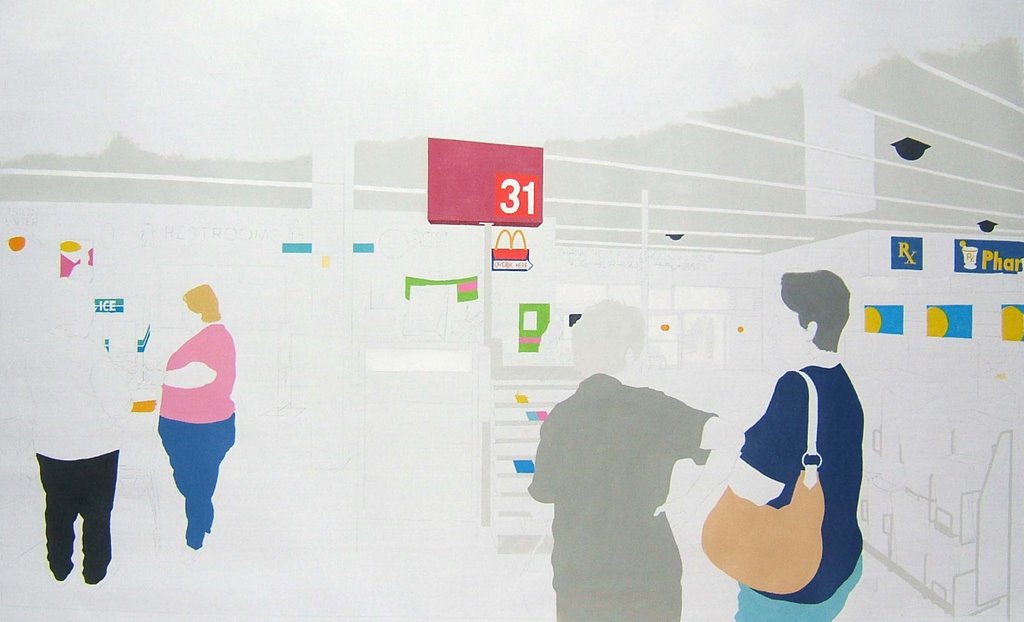
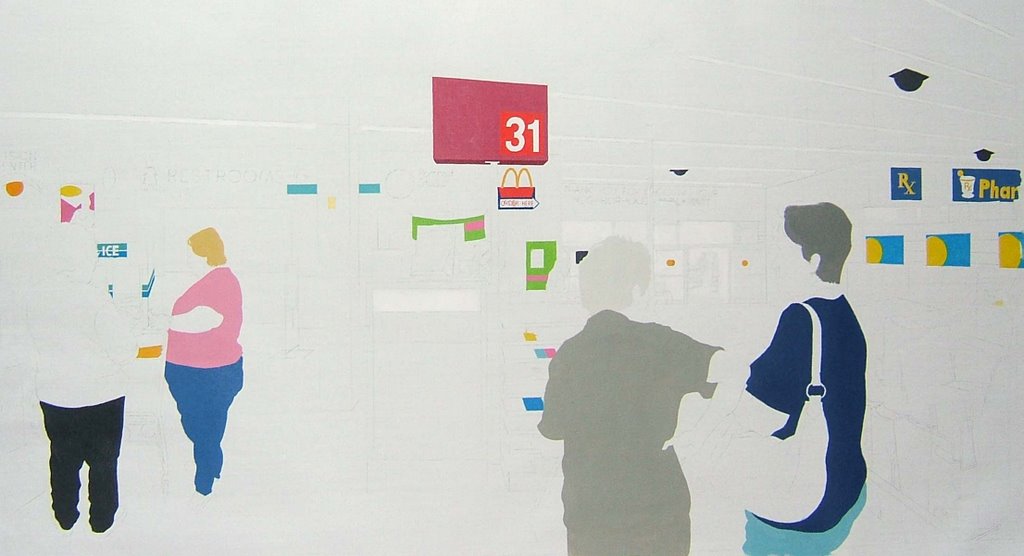
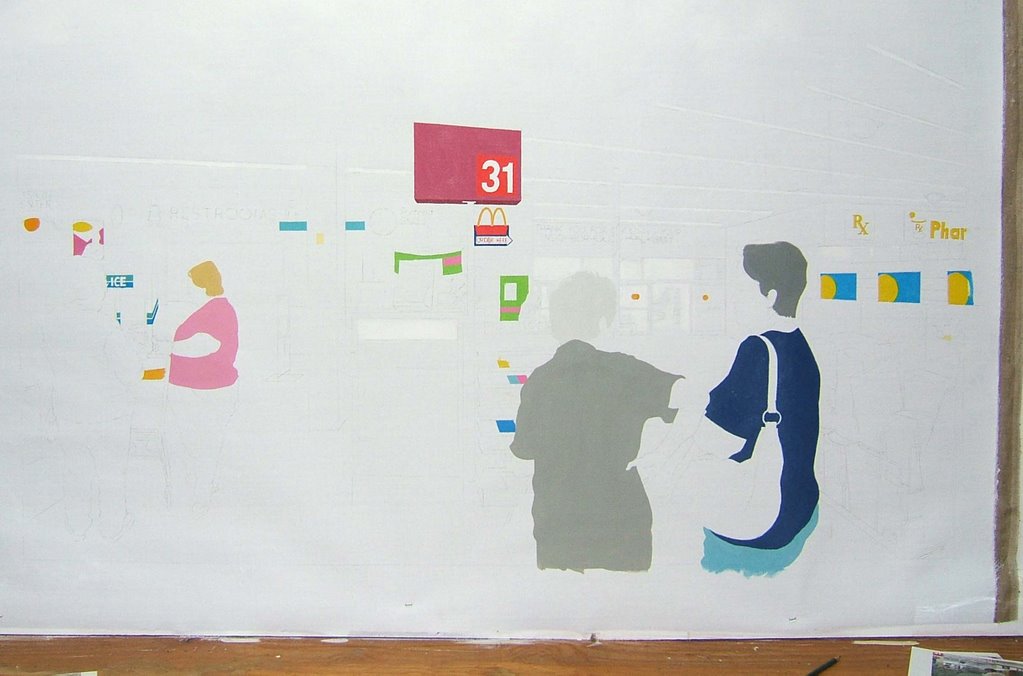
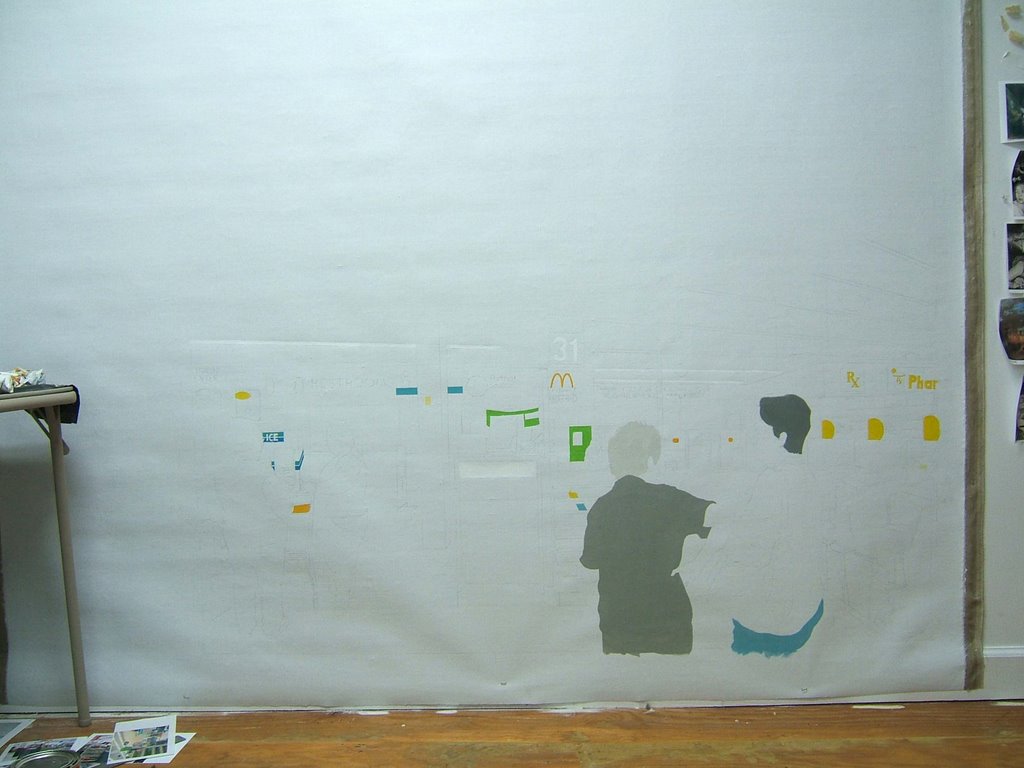
 Today, worked on dozens of details in the Wal M*rt area of the painting, as much in the upper part is drying. My amazing husband took the afternoon off of work to rewire the Art Trailer so some Miami driver does not crash into my art on Rt. 95, due to lack of brake lights. He worked through the sunset until 7:30.
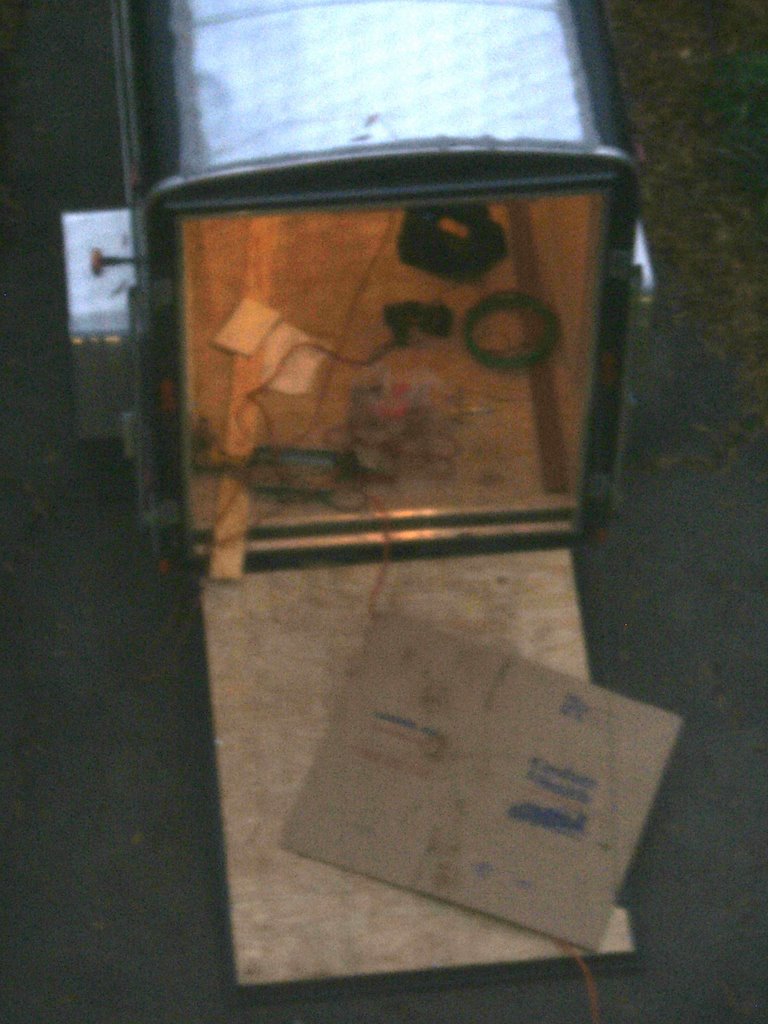 (view from my studio) Now I will make a quick dinner, and do some research/business work tonight to get ready for Basel. Tomorrow will be a fun painting day, with major progress before I go away....